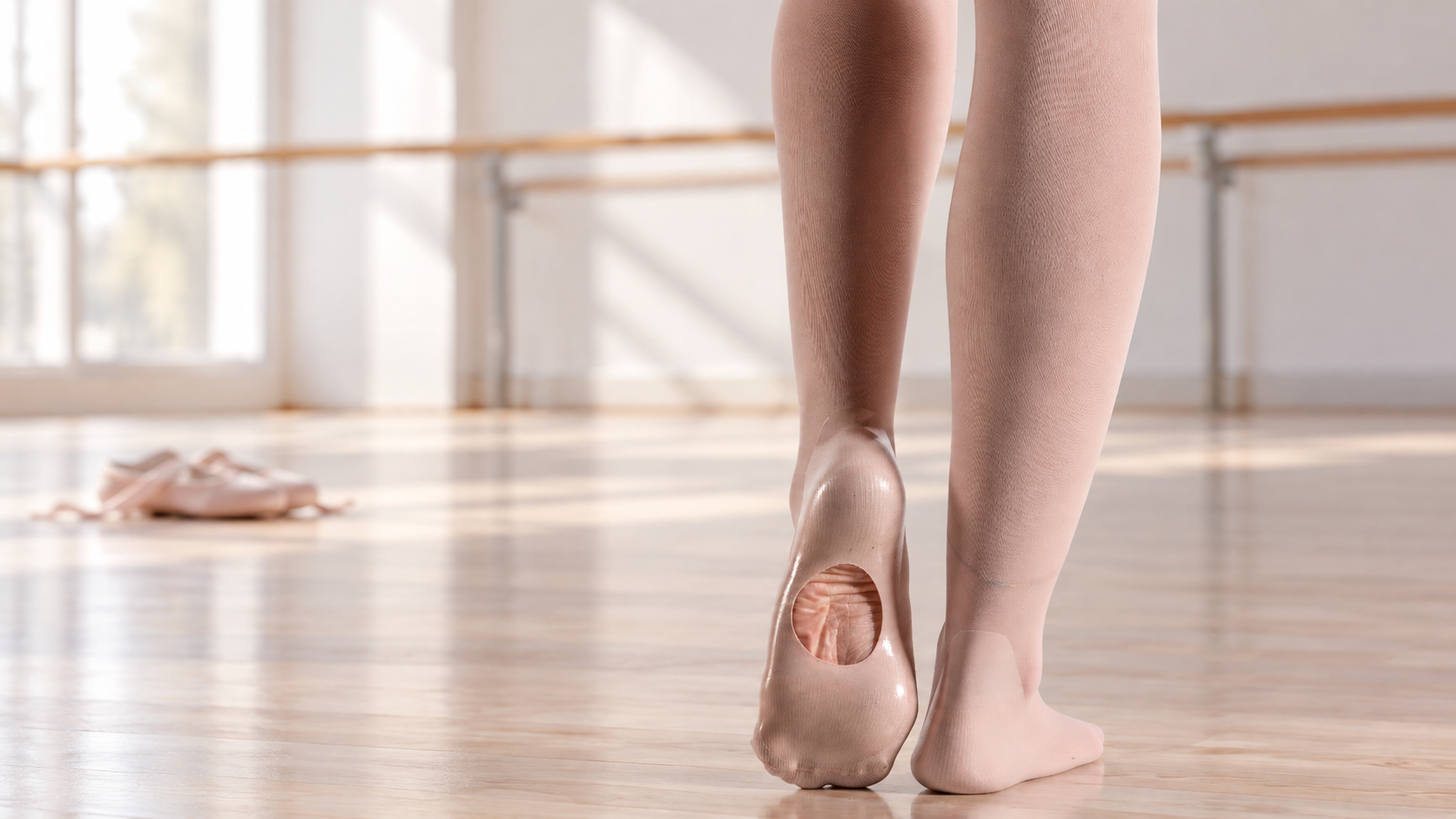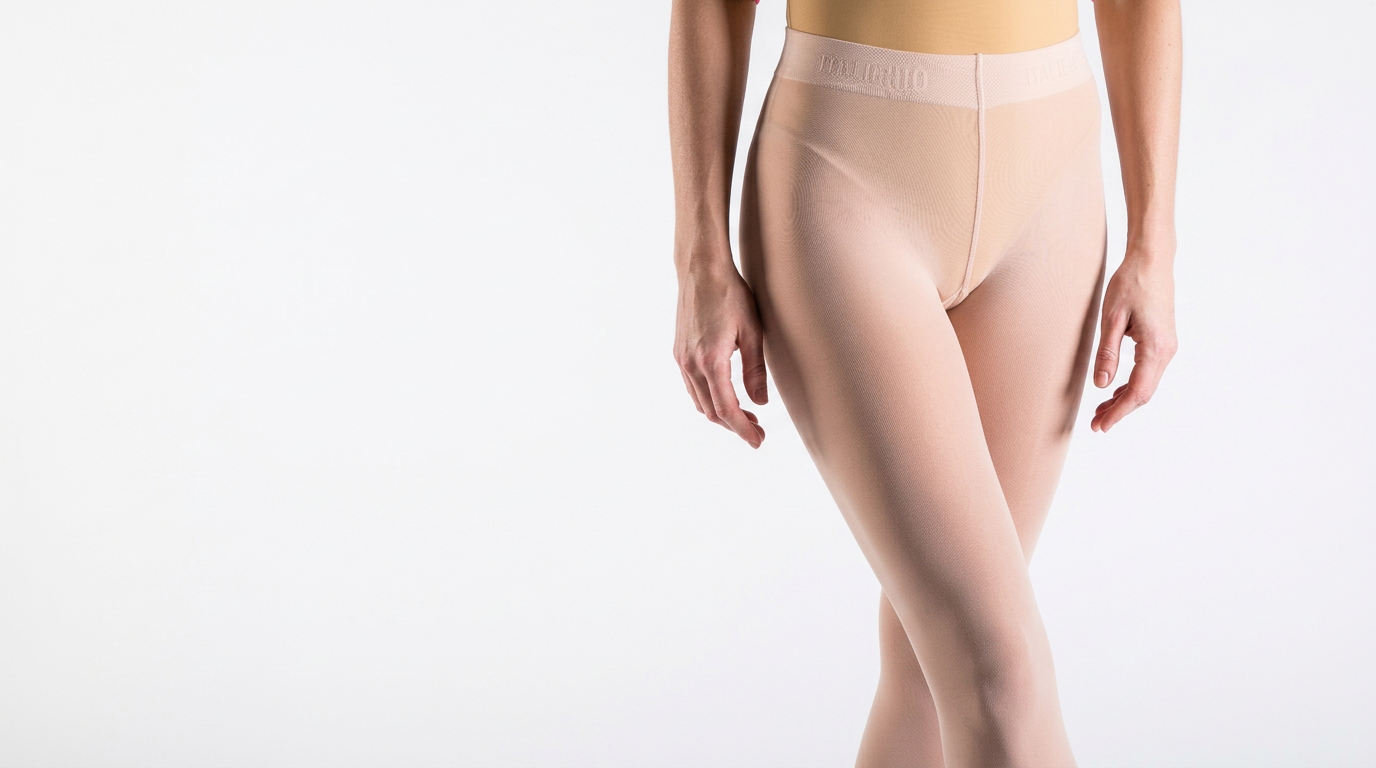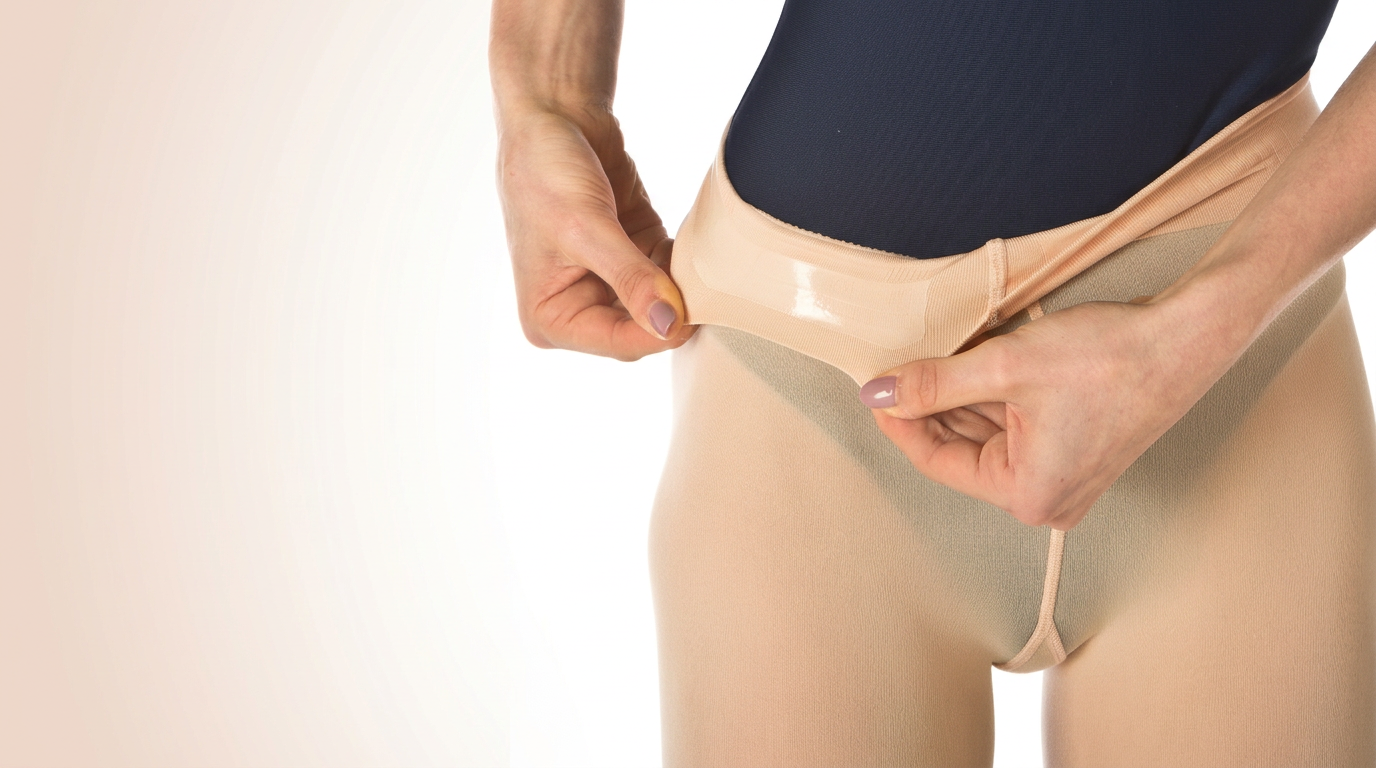



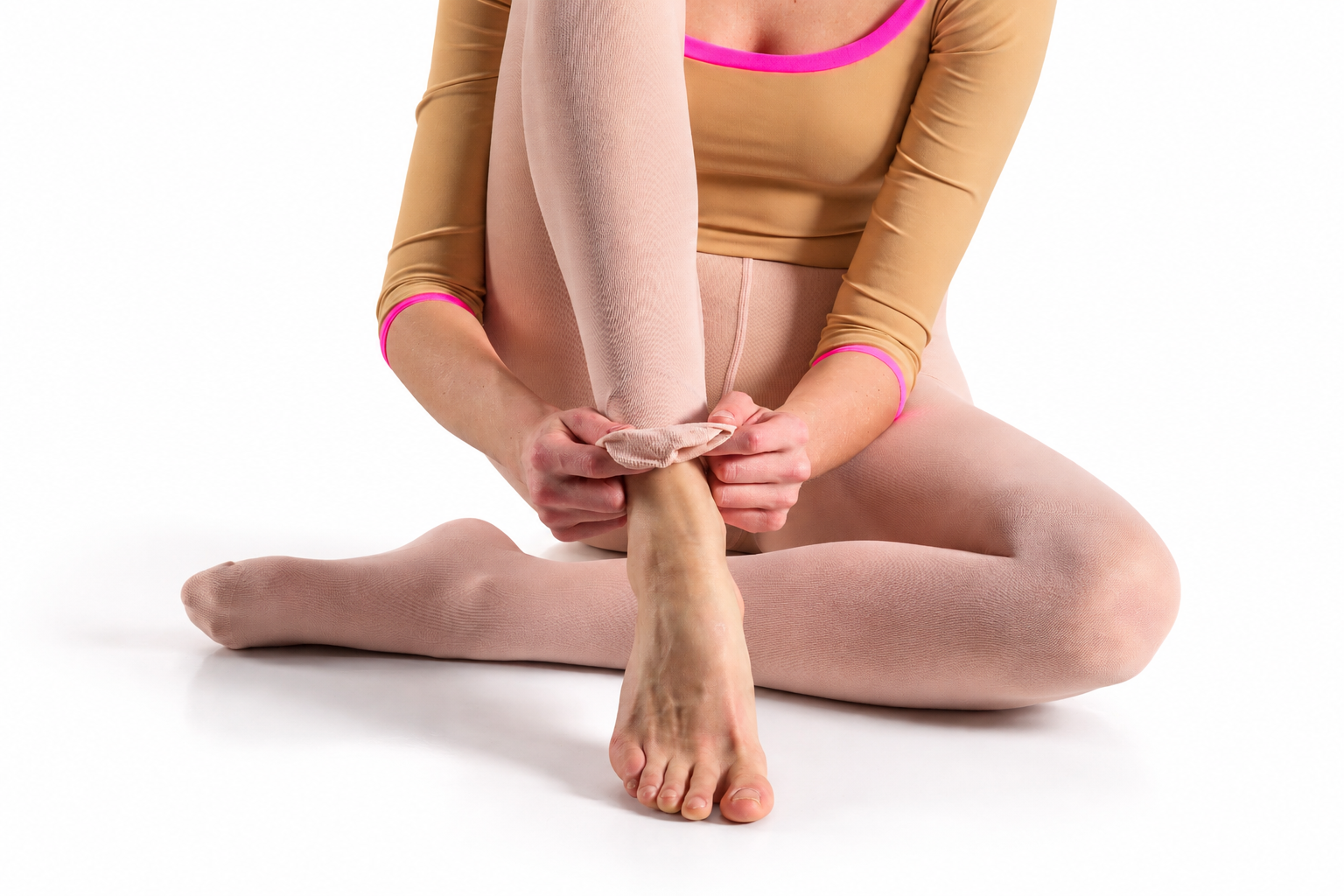
Convertible dance tights have an opening under the sole that allows you to uncover your foot without taking off the whole garment. A practical detail when, during a class or rehearsal, you need to reach your toes, adjust your toe pads, or switch from a covered foot to a bare one.
But how does this opening work, and what changes compared to a footed tight?
What Does "Convertible" Mean?
"Convertible" refers to the ability to wear the same tights in two ways: with the foot covered, or bare, passing the foot through the opening under the sole. It is not a flaw in the fabric, but a feature built into the design of the garment.
The difference from footless tights is exactly this: the convertible style lets you choose the configuration based on the activity, without changing tights.
What Is the Opening Under the Foot For?
Reaching your toes and adjusting toe pads
During pointe work, you may need to reach your toes or reposition protections. The opening lets you uncover the foot without pulling the tights down from the waist: useful when adjusting toe pads before resuming practice
.
Switching from a covered to a bare foot
Convertible tights also allow you to free the foot whenever the activity requires it. The fabric of the foot section is pulled up, temporarily turning the garment into footless tights.
The benefit is therefore not limited to pointe work: it is the ability to adapt the same garment to different needs throughout your day of dance.
Footed or Convertible Tights: What Changes?
The main distinction concerns access to the foot:
Footed tights keep the foot covered and have no underfoot opening.
Convertible tights let you uncover and recover the foot through the opening, without removing the whole garment.
The choice is therefore not only about how the tights look, but how they will be used. Dancers who need frequent access to the foot may find the convertible version especially practical.
The Opening and Grip Inside the Shoe Are Not the Same Thing
The underfoot opening makes the foot accessible. It should not be confused with the characteristics of the fabric or with constructions designed for the contact between tights and shoe.
Italiento, for example, describes sole-area constructions designed to improve the grip between the tight and the shoe. That is a separate function from uncovering the foot: two details to evaluate separately when comparing models.
To explore this aspect, read our article Dance Tights and Ballet Shoes: Why Foot Grip Matters.
A Small Detail, a Precise Function
The opening under the foot answers a concrete need: being able to reach your foot without changing tights. For dancers who use toe pads or alternate covered and bare-foot moments, it is a feature worth considering in your choice.
Explore Italiento dance tights and check the features of each style to find the one best suited to your work in the studio.